California Title Record Stuck After an Electronic Lien Release
California-specific troubleshooting based on DMV ELT processing and manual suspense conditions.
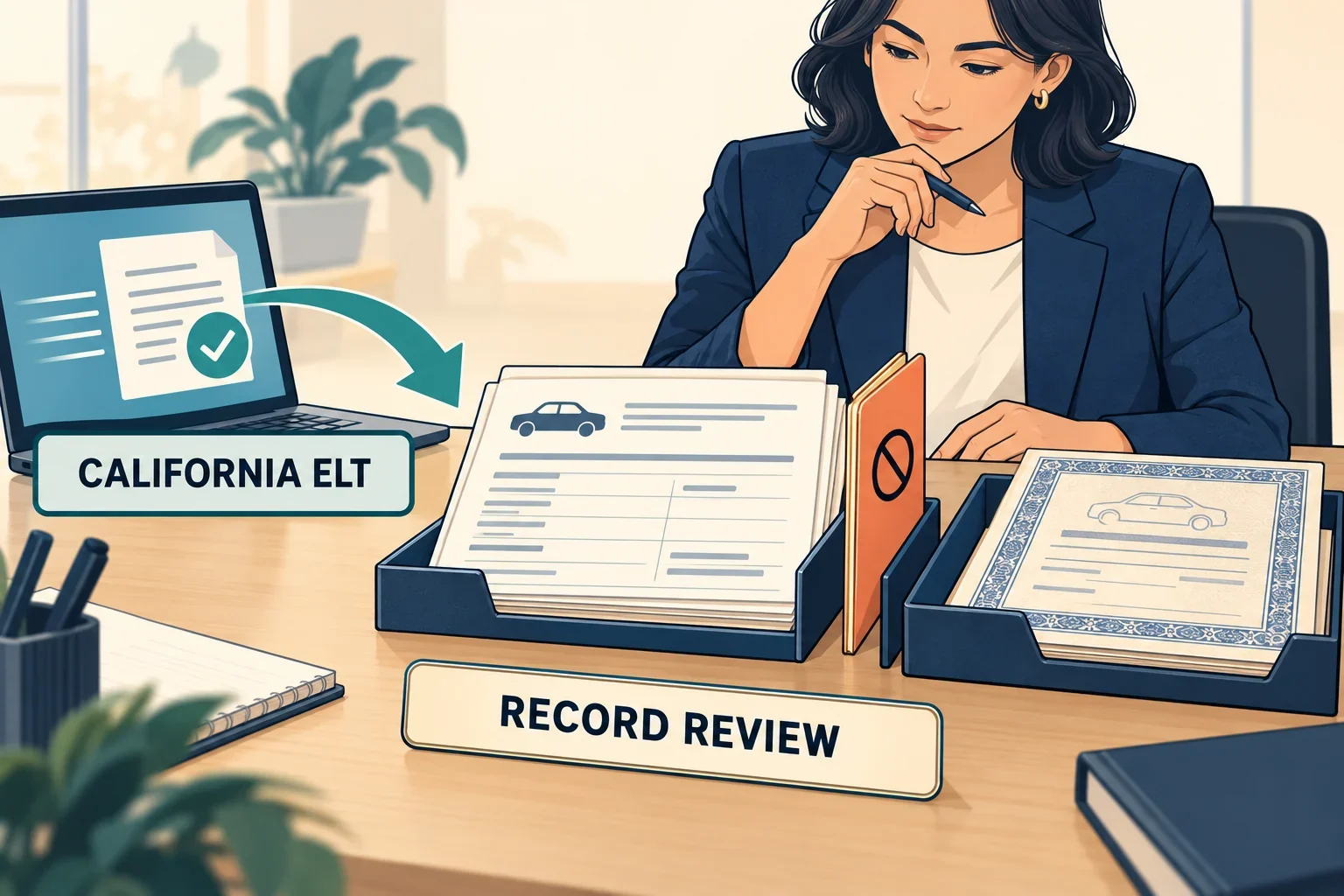
A lender can submit an electronic lien release and the California title record can still be waiting for another step. The key question is whether DMV accepted the ELT transaction and can process it automatically, or whether an existing record condition has routed it for manual handling. California DMV describes eight days as the average time to receive a paper title after an electronic transaction; it also says a pending report of deposit of fees (RDF) or suspense transaction prevents automated title issuance and is processed manually. That average is not a deadline measured from your final loan payment.
Start with the record, not another transmission
First confirm the payoff posted and ask the lienholder’s title or ELT team for the date it sent the release, the transaction reference or trace number, the vehicle identification number used, and the result it received. Ask whether the message was accepted, rejected, or remains pending. A generic “we released it” answer does not establish which event occurred.
Then check the California DMV record. Ask DMV what it currently shows for the legal owner, the lien release, and title issuance. If a pending RDF or suspense is present, ask what transaction or document is holding the record, which party must supply it, and where the next submission should go. Record the representative’s name, date, case number, and the exact next action. Consumers may not see every internal processing status in an online vehicle account, so ask what record or written notice can confirm the answer.
The state manual separates clearing items from transactions that need further headquarters processing. An RDF is used to collect fees on an incomplete application; suspense means a transaction needs additional processing or verification. These labels describe different conditions, so request the actual status and any reason or missing-item description available for your record. Do not infer that a particular code applies unless DMV or the written notice identifies it.
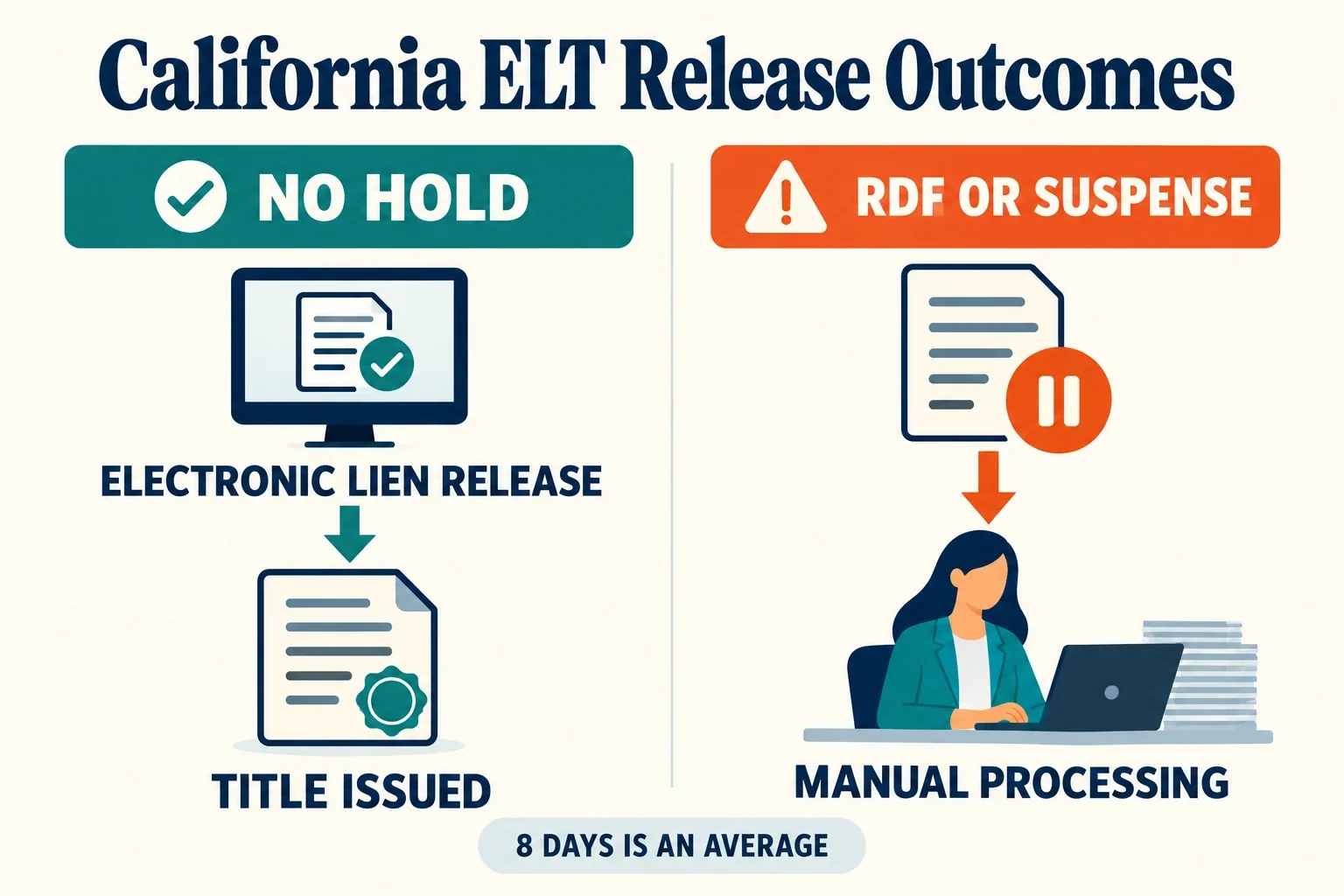
A release may be accepted while a separate record condition still routes the title for manual review.
Follow the first unconfirmed handoff
Compare the lender’s ELT trace with DMV’s record status. If the lender has no acceptance or transaction reference, ask its ELT team to research the original submission and correct any rejected data. Give it the VIN and date, but ask it to verify the name/address identifier it transmitted against DMV’s current ELT listing. California DMV says an incorrect ELT participant name or address can result in a paper title being issued and returned for correction, delaying the lienholder record and later transfers.
If the lender can document an accepted release but DMV reports a pending RDF or suspense, repeating the same release may not address the hold. Ask the agency what item or review remains open and which party must respond. DMV’s manual says an ELT transaction does not clear a pending RDF. Keep the response narrowly focused on the outstanding record condition, rather than asking the lender to resend a transaction DMV already has.
If DMV shows the lien released and a paper title issued, switch to the delivery path. Confirm the issue date and named recipient: depending on the transaction, DMV may send the title to the registered owner, a dealer, or a new lienholder. Verify the address used at the time of release, who was expected to receive the document, and whether it was returned. A title that was issued but mailed elsewhere is a delivery or custody problem, not evidence that the ELT release failed.
| What you can confirm | Next question |
| --- | --- |
| Lender cannot locate an accepted ELT transaction | Which team can trace or correct the original submission? |
| DMV reports RDF or suspense | What item is pending, who must provide it, and how will it be cleared? |
| DMV says the lien is released and title issued | Who was the named recipient, and what address or return record applies? |
| ELT name or address does not match | What correction will the participant make using the current DMV listing? |
| Status | What it suggests | Next check |
|---|---|---|
| No accepted ELT reference | Submission may not have completed | Lender traces original transmission |
| RDF or suspense on DMV record | Automatic issuance is held | Ask DMV what item is pending |
| Title issued, lien cleared | Release completed; delivery remains | Verify recipient, address, return status |
| ELT identifier mismatch | Participant data may need correction | Lender checks current DMV listing |
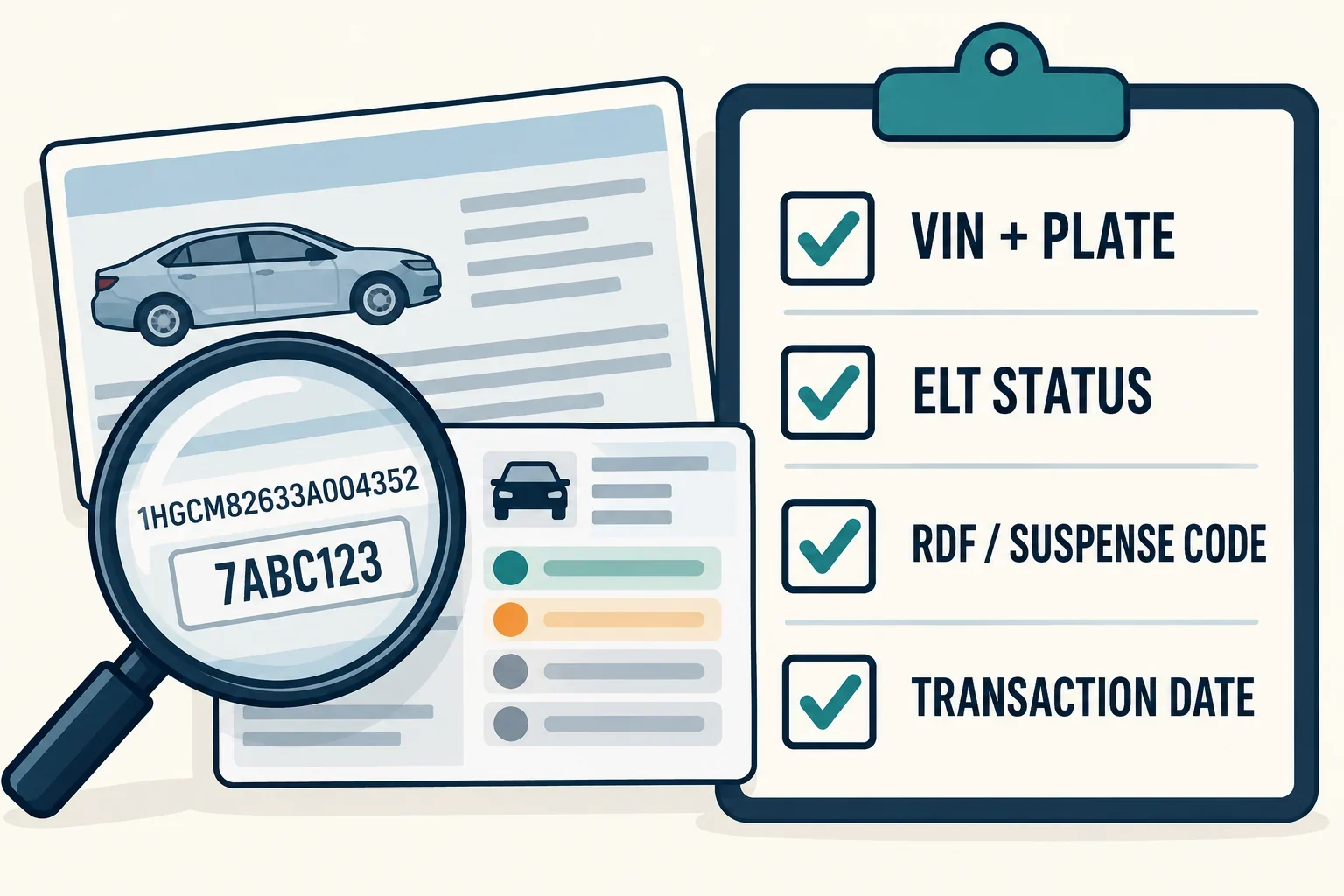
Use the VIN and transaction date to keep the inquiry tied to the right record.
Keep a compact evidence file
Save the payoff confirmation, ELT release date and reference, VIN, current registration or title record, DMV status or correspondence, and any title mailing or return information. If you contact the lender and DMV separately, keep a dated call log and ask each to state what it received, what it sent, and the next event expected. Send only copies unless the agency specifically requires an original, and keep a copy of every package and delivery receipt.
If the lender has merged, closed, or changed names, use DMV’s Financial Institution Locator to identify a possible successor and the correct contact. That locator has a separate procedure for a financial institution that cannot issue a release; it should not be treated as a substitute for tracing an ELT release that the lender says it already sent.
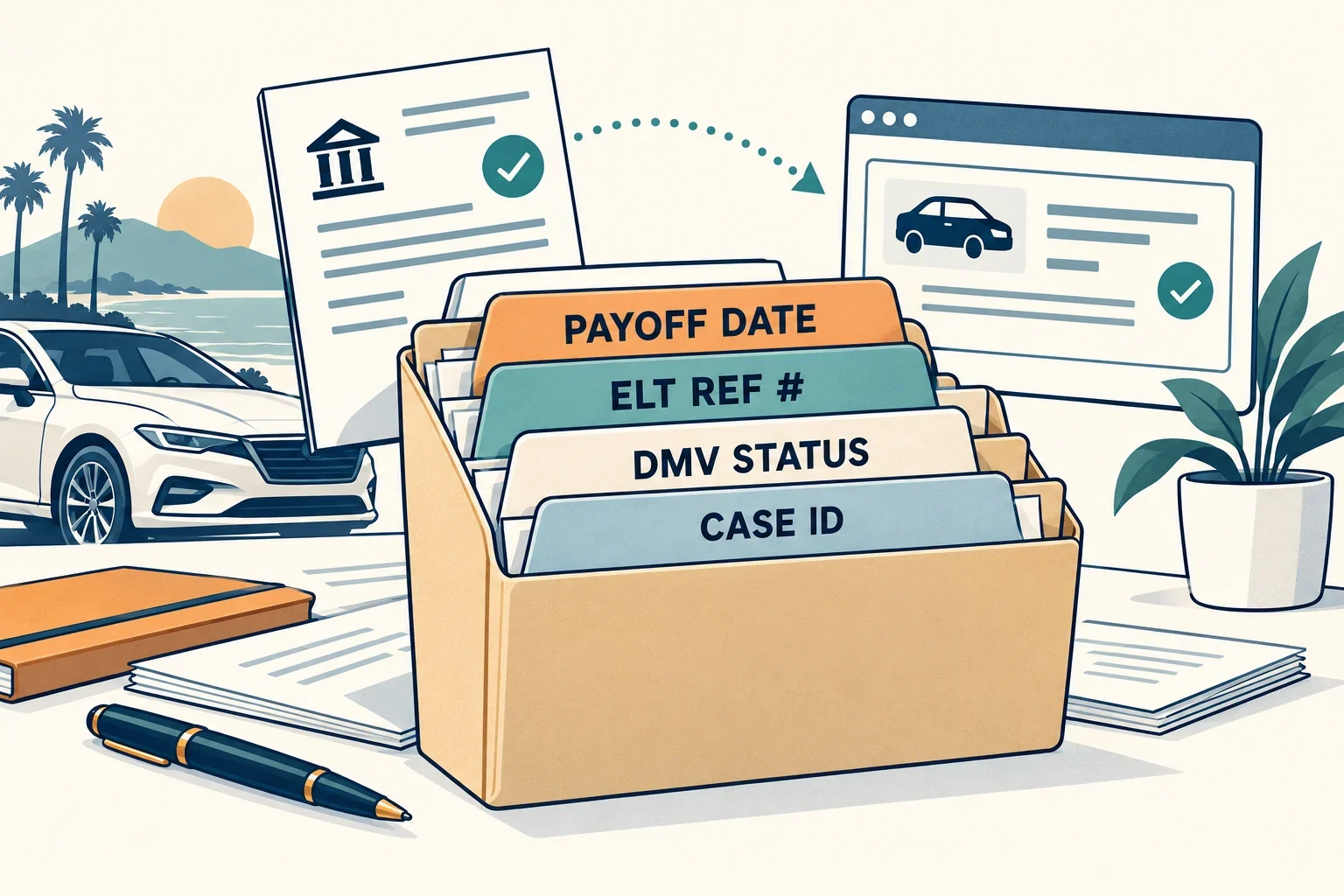
A compact chronology helps the lender and DMV identify where processing stopped.
When a paper release is not a shortcut
Do not mail a REG 166 simply to bypass an electronic record without checking eligibility. California DMV notes that the form cannot be used for a paperless title or for a vehicle two model years old or newer, and it generally requires notarization. Ask DMV which release method fits the vehicle’s current title record before requesting or submitting a paper form. Never edit the title, release, or DMV notice yourself.
A practical written request
You can ask the lender: “Please confirm the date and result of the ELT lien-release transaction for VIN [VIN], provide its transaction or trace reference, and tell me whether DMV accepted or rejected it. If it was rejected or remains pending, please identify the data or correction your ELT team will submit.”
You can ask DMV: “Please confirm the current legal-owner and title-issuance status for VIN [VIN]. Is a pending RDF or suspense item preventing automatic processing? If so, what missing item or review is open, which party must respond, and what written status or case reference can I use to follow it?”
Use the eight-day figure only as DMV’s published average after the electronic transaction. If the status is still unresolved, follow the specific party’s documented next action rather than restarting the clock from payoff or making repeated duplicate requests. If there is a sale, transfer, or court deadline, tell the relevant parties promptly and verify any legal deadline with the controlling California source or qualified counsel.
General information only: This is general information, not legal advice - consult a local attorney for your specific situation. State law, contracts, and agency procedures can change the answer.
Sources
- California DMV — Electronic Lien and Title (ELT) Program, §1.050
- California DMV — Definitions for Clearing, Suspense, and Incomplete Applications (RDF), §1.040
- California DMV — Financial Institution Locator
- California DMV — REG 166 lien release
- California DMV — ELT Program
Sources are provided so you can verify the controlling public guidance. State forms, fees, addresses, and procedures can change.
Frequently asked questions
Does California DMV’s eight-day average start on my payoff date?
No. DMV describes eight days as an average time to receive a paper title after an electronic transaction. Ask the lienholder for the ELT submission date and transaction reference; payoff posting and electronic submission are separate events.
What does an RDF or suspense status mean for an ELT release?
DMV says a pending RDF or suspense transaction can prevent automated title issuance and requires manual processing. Ask DMV what specific item or review is open and which party must respond. An ELT transaction does not itself clear a pending RDF.
Should I ask the lender to send the lien release again?
First ask whether the original ELT transaction was accepted, rejected, or remains pending. If DMV already has an accepted release but another record condition is holding processing, resending the same release may not resolve that condition.
Can I use REG 166 instead?
Check with DMV before relying on it. California says REG 166 cannot be used for a paperless title or a vehicle two model years old or newer, and the form generally requires notarization.