California ELT Title Not Received After Payoff
California-specific troubleshooting based on DMV ELT processing, including reasons an automated paper title may be held for manual handling.
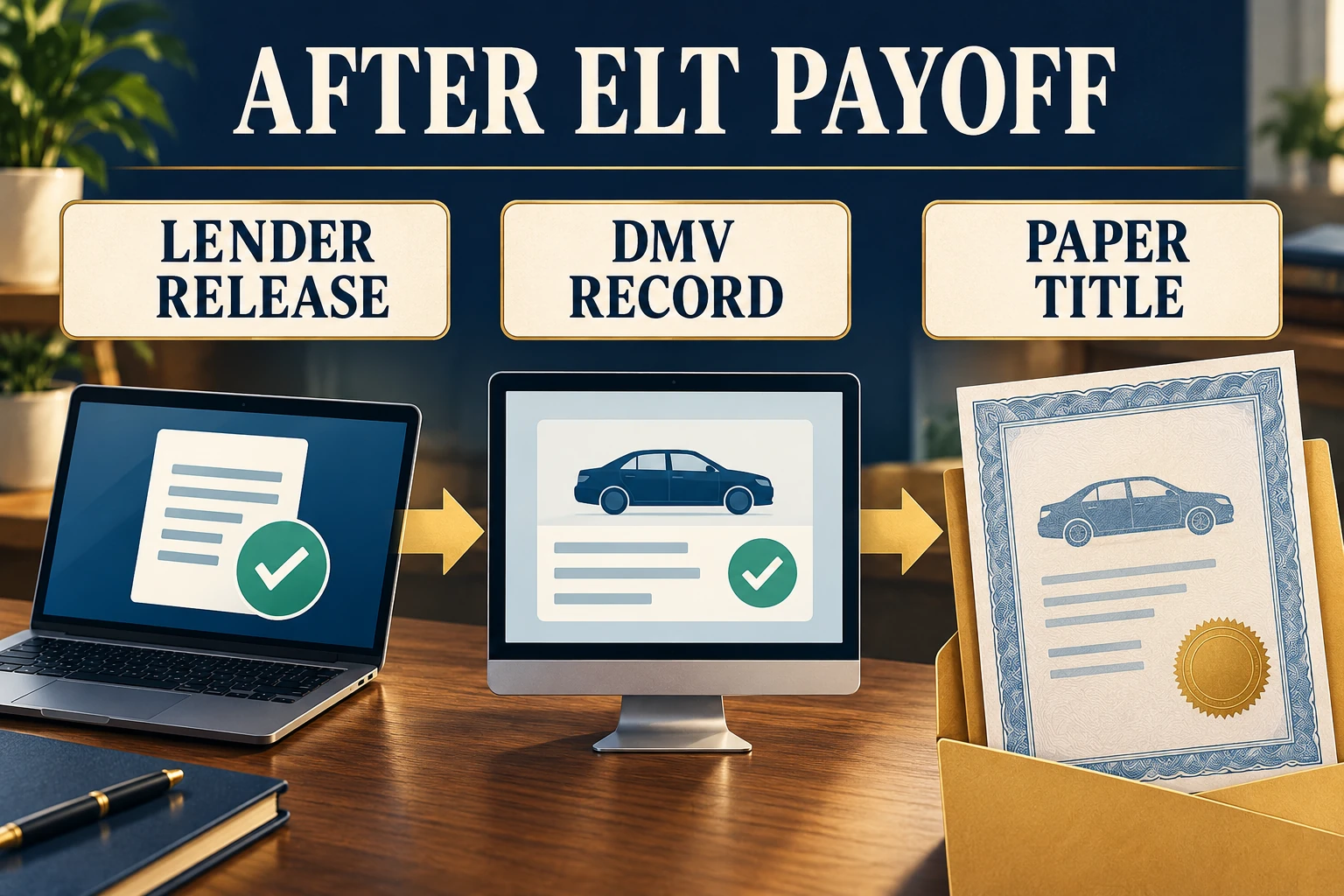
You paid off a California vehicle loan, but no paper title arrived. The useful question is not simply how long mail takes. Separate four events: the lender records the payoff, the lender sends an electronic lien release, DMV records it and issues a title, and the title reaches the correct recipient. California DMV's ELT manual gives an eight-day average from the electronic transaction, not from the borrower's final payment. Start with the last event anyone can confirm, then trace the next handoff.
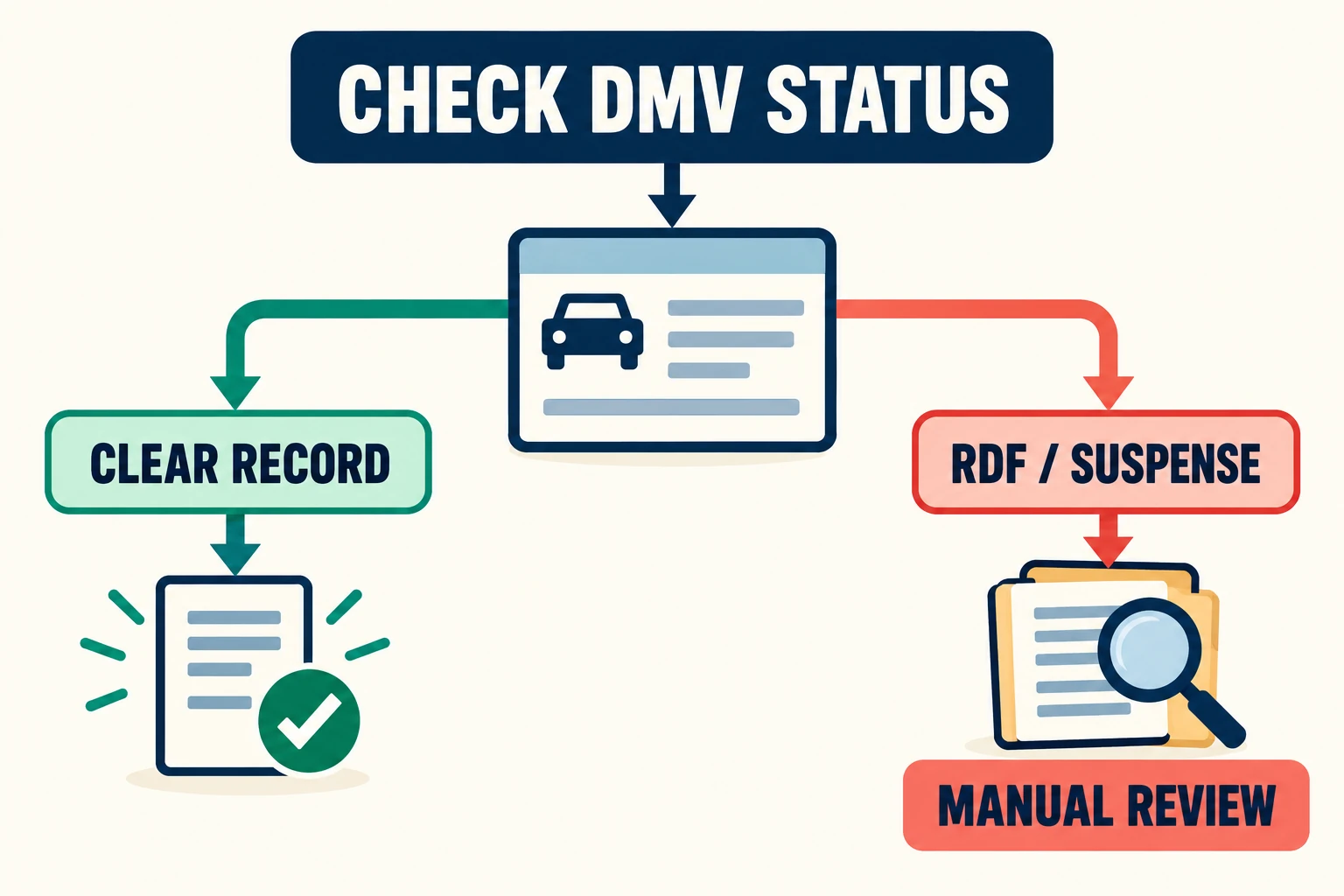
A record hold and a missing envelope call for different follow-up.
Locate the break in the California handoff
Ask the lender's title or lien-release team for the date the ELT transaction was sent, its confirmation or reference number, and the recipient they selected. A zero balance is proof the loan was paid; it does not by itself show that DMV received a release transaction. Keep the payoff confirmation beside the lender's transmission details so a second representative can find the same record.
Next ask California DMV whether the lien-satisfaction transaction appears on the vehicle record and whether a paper title was issued. If it was issued, get the issue date and the recipient/address shown for that transaction. If it was not issued, ask whether a pending Report of Deposit of Fees (RDF), a suspense transaction, or another record condition is preventing the automated issue. Write down the wording DMV uses; do not translate an unfamiliar code into a diagnosis.
The recipient depends on the transaction. DMV says a lien satisfied by the registered owner results in a sole-owner paper title mailed to that owner. A transaction adding a new lienholder can route the title record differently, and a dealer transaction can send the paper title to the dealer. Ask the lender which transaction it submitted and ask DMV where the resulting title was directed. A new mailing request cannot correct a release that went to the wrong transaction path.
| Checkpoint | Ask for | What it separates |
|---|---|---|
| Lienholder | ELT send date and transaction reference | Payoff posting from electronic release |
| DMV record | Release status, issue status, RDF or suspense | Automated issue from manual processing |
| Title delivery | Issue date, named recipient, mailing address | DMV issuance from postal delivery |
Count from the electronic transaction, not payoff day
California DMV publishes an average of eight days to receive a paper title from an electronic transaction. It is an average, not a guarantee or a statutory deadline, and it does not necessarily begin when the final payment clears. The lender may need to close the account and then transmit its release; ask for the transaction date instead of estimating it from your bank statement.
For example, if a payment posted on January 4 and the lender says it transmitted the ELT release on January 11, the DMV's eight-day average is measured from the electronic transaction, not January 4. Those dates are only an illustration. If DMV confirms that the title was issued, move to the issue date and address; if the record is held, work on the hold rather than treating the case as a missing envelope.
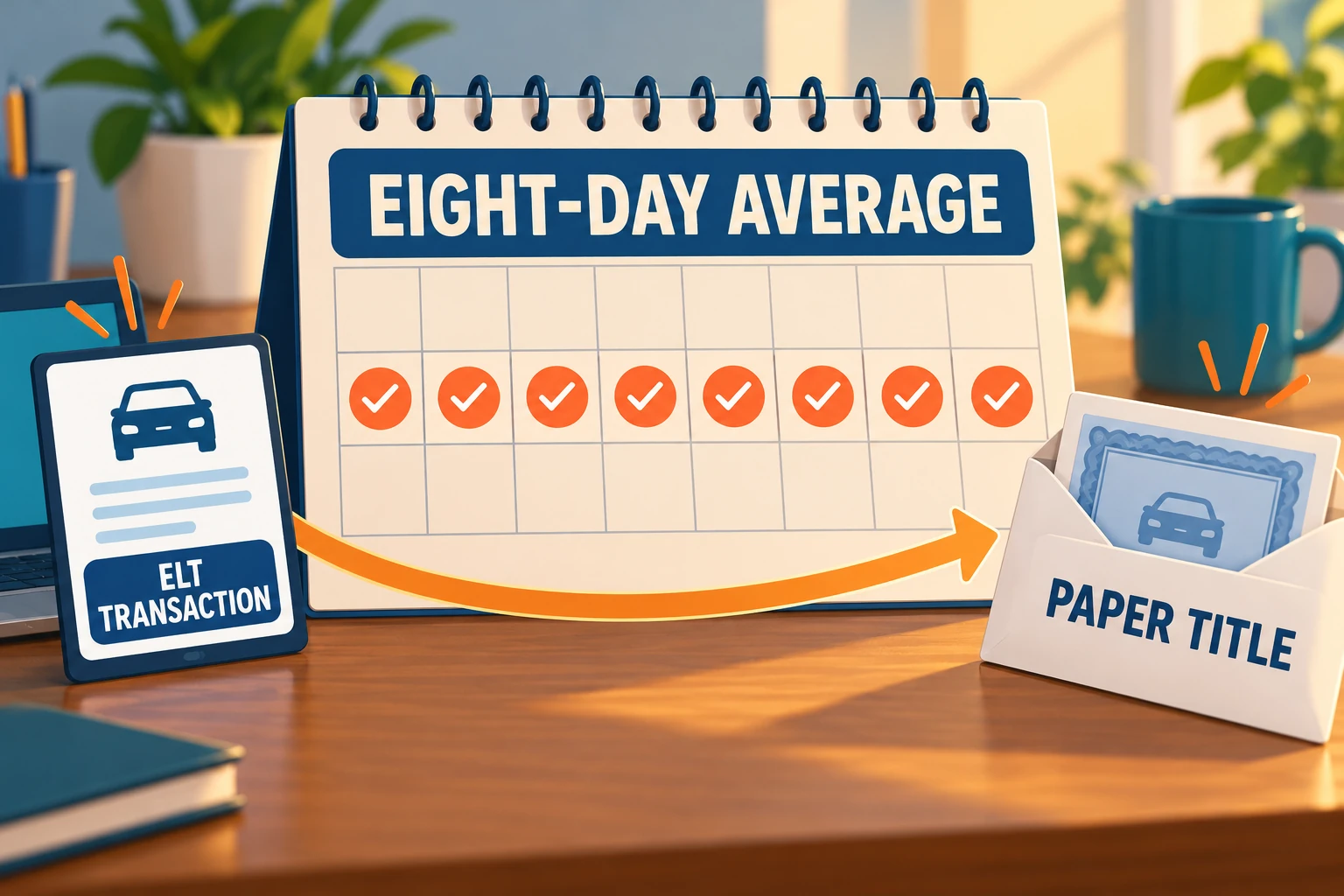
Eight days is a published average, not a guaranteed deadline from the final payment.
A record hold changes the next call
DMV's ELT manual says a pending RDF or suspense transaction prevents automated title issuance; those records go to manual processing. That describes a processing path, not a reason you can resolve by mailing another release form. Ask which status is present, whether DMV needs information from the registered owner or lienholder, and which party must submit it. Request a case or reference number and the next check-in step.
A second mismatch can create a paper-title correction loop. DMV says ELT lienholder name and address information must match its current listing. If the information does not match, DMV may issue a paper title that must be returned for correction, delaying the title record and later transfers. Ask the lender to compare the submitted ELT name/address with DMV's current participant listing before repeating the transaction. Do not assume that an address change or a duplicate-title request fixes a mismatched lienholder record.
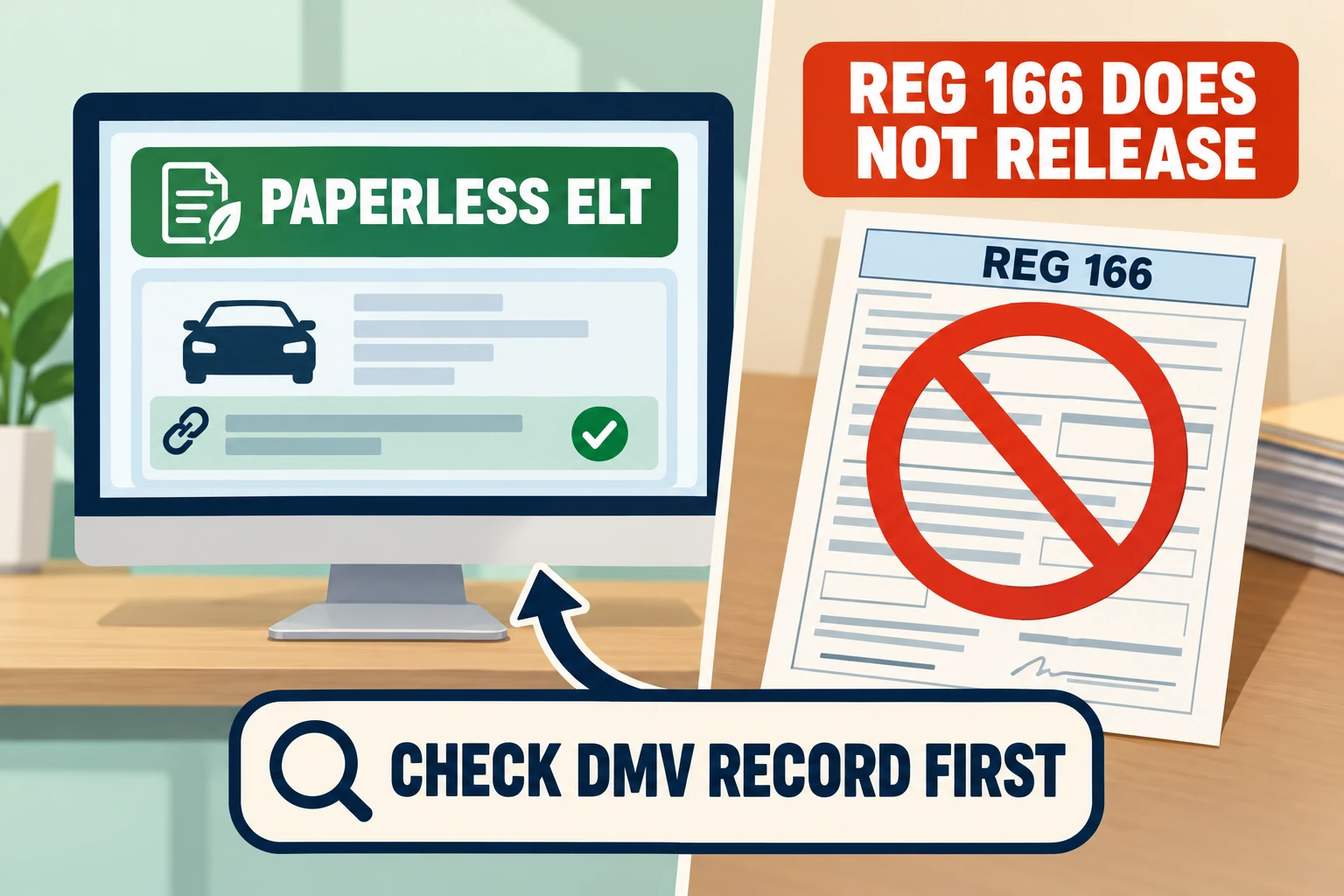
Check the vehicle record before using a replacement or paper-release form.
Keep an ELT release separate from a replacement-title request
Form REG 166 is a paper lien-satisfaction release. DMV says it cannot be used for a vehicle with a paperless title, and the form itself also excludes vehicles that are two model years old or newer. For an electronic lien, ask the lienholder to verify or resubmit the ELT transaction through its authorized process; do not treat a signed paper form as proof that the electronic record changed.
A replacement application is a different question. Use that route only after confirming that a title was issued and then lost or not received. DMV's manual says a title lost after lienholder release on a vehicle three model years or older requires a notarized lienholder release on REG 227 or a notarized REG 166. For a vehicle two model years old or newer, the lienholder must apply for the replacement title; lien releases on REG 227, REG 166, or other forms are not accepted for that step. Confirm the current form instructions with DMV before paying a fee or mailing originals. These distinctions matter because a replacement request cannot make an unrecorded ELT release appear.
Ask for an answer you can verify
A short call can separate the lender's step from DMV's step. Have the VIN, borrower/account reference, payoff confirmation, and current mailing address ready. Ask the lender: “What date did you transmit the California ELT lien satisfaction, and what reference number and recipient were attached?” Ask DMV: “Does the record show that transaction? Was a paper title issued, to whom and at what address, or is an RDF/suspense status holding automated issuance?” Write the answer, representative, date, and next action in one chronology.
If the lender has merged, changed names, or closed, use California DMV's Financial Institution Locator to look for a possible successor and contact details. The locator also explains what evidence DMV asks for when a listed institution is closed, has no information, or cannot provide a notarized release. Those are separate procedures with specific mailing and evidence requirements; read the current DMV instructions rather than applying them to an ordinary ELT delay.
Close the case only when the relevant output is visible: the lien release is recorded, the title issue/recipient is identified, and any paper-title correction or mailing problem has a documented next step. If the record conflicts with reliable payoff evidence, an ownership dispute exists, or a sale or court deadline is approaching, preserve the records and ask a California attorney about the specific rights and deadlines. This guide explains public process information, not legal advice.
General information only: This is general information, not legal advice - consult a local attorney for your specific situation. State law, contracts, and agency procedures can change the answer.
Sources
- California DMV - Electronic Lien and Title Program Manual, Section 1.050
- California DMV - Electronic Lien and Title Program
- California DMV - Financial Institution Locator
- California DMV - REG 166 Lien Satisfied Release
- California DMV - Certificates of Title Lost After Release by the Lienholder, Section 20.020
Sources are provided so you can verify the controlling public guidance. State forms, fees, addresses, and procedures can change.
Frequently asked questions
When does California DMV's eight-day ELT average start?
It is measured from the electronic transaction, not necessarily the date your final payment cleared. Ask the lienholder for its transmission date and reference number.
What should I check if the lender says it released the lien?
Ask DMV whether the ELT transaction appears, whether a paper title was issued, and which recipient/address was attached. If it was not issued, ask whether an RDF or suspense status is preventing automatic issuance.
Can I use REG 166 to remove a lien from a paperless ELT record?
No. California DMV says REG 166 cannot be used for a paperless title. Ask the lienholder to confirm the electronic release transaction instead.
Should I file for a replacement title if it never arrived?
First confirm that DMV issued it and identify the recipient and address. Replacement rules differ by vehicle model year and whether the title was released; check the current California DMV instructions before filing.