Wrong Lienholder Listed on a Car Title
How to investigate clerical, dealer, lender, or title-agency errors without altering the title yourself.
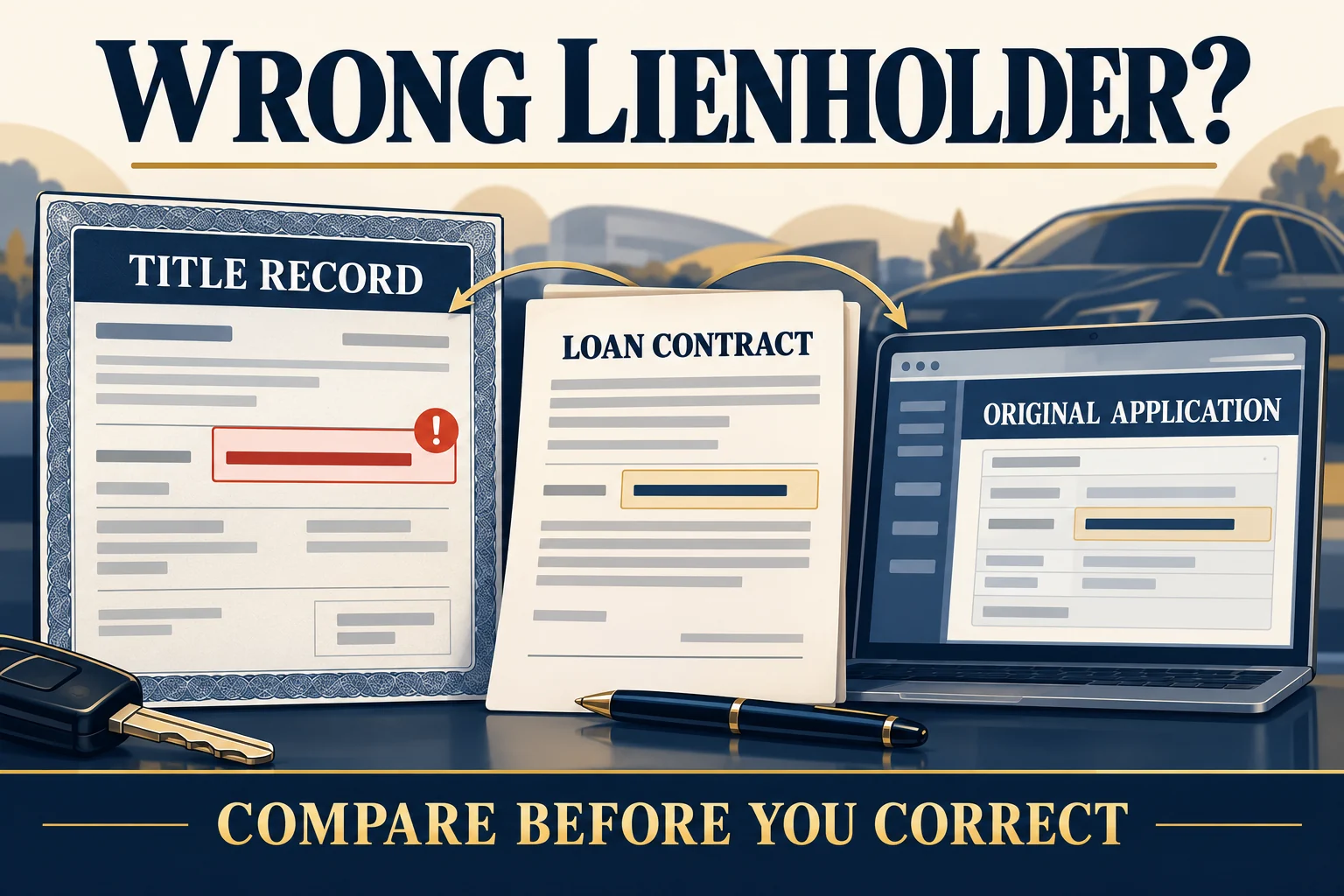
A different lienholder appears on your car title than you expected. First separate a name change or valid loan transfer from an actual title-record error. A familiar brand can change through a merger, assignment, refinance, or loan sale; the spelling on the title alone does not prove who owns the debt. Compare the current title or official vehicle record with your retail installment contract, the original title application, lender notices, and any payoff or transfer letters. Do not sign a lien release or change the title by hand while the record is still unexplained.
Preserve the record and identify the mismatch
Save a clear copy of the title front and back and, where available, the state's current lien or title-status result. Record the title number, VIN, issue date, state, and the exact lienholder name/address shown. Keep your signed purchase or refinance documents, dealer paperwork, lender account notices, payment history, and any letters that announce an assignment or servicing change. If the title is electronic, ask the title agency how to obtain an official record or printout; a registration card may not show every field held in the title system.
Compare names and dates across the documents. A difference may be only a new company name, a servicer, a successor lender, or a state record entry. Ask the named company to confirm in writing whether it claims a security interest in this vehicle, whether it acquired or services an existing account, and which document or transaction supports the entry. If the company says it has no interest, request a signed letter of no interest or the state-specific release/correction document it is authorized to provide. Do not send sensitive account or identity details to an unverified contact; use a number or address from an official statement or agency directory.
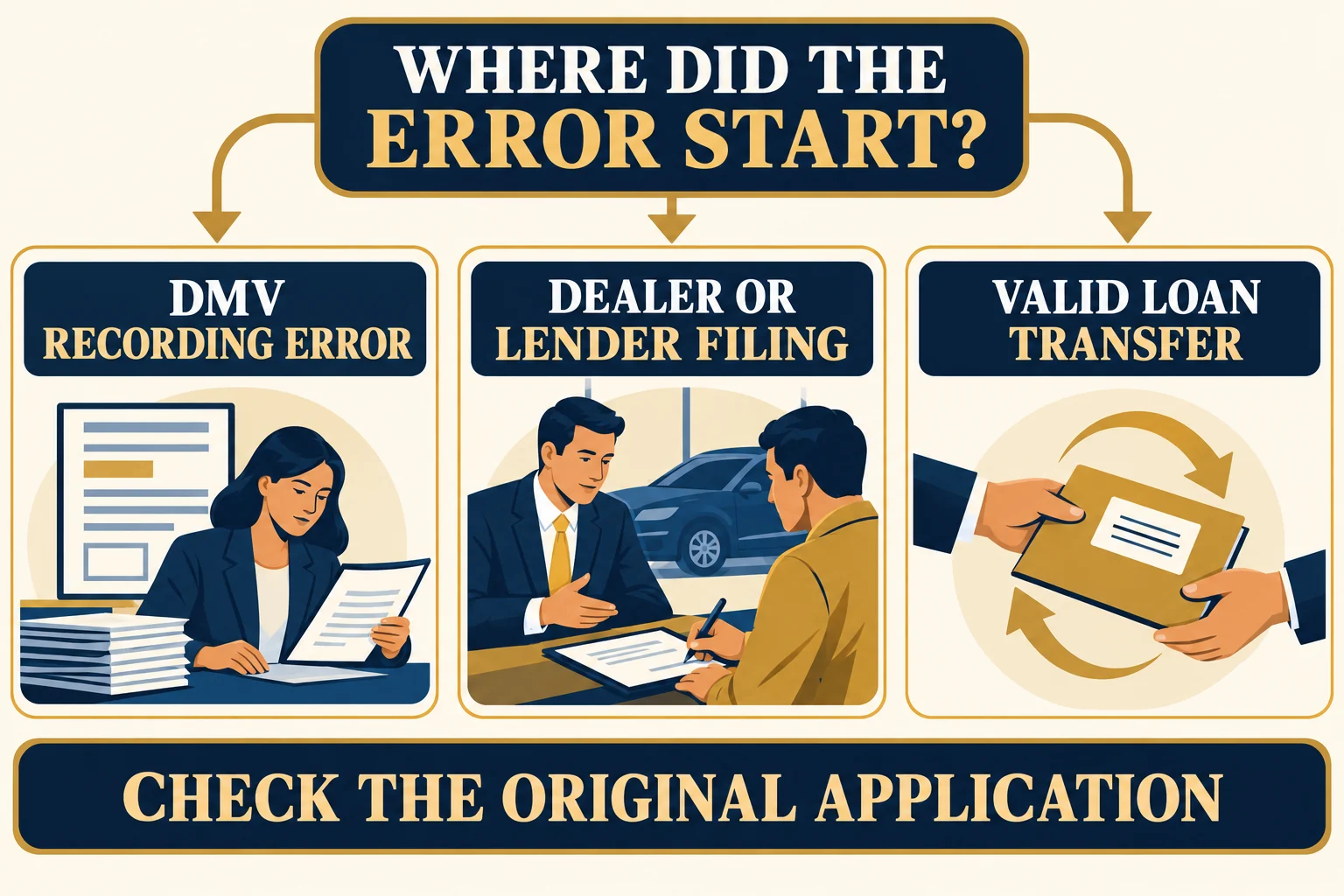
Compare the title, signed loan records, and original filing before asking for a correction.
Find which handoff created the entry
Ask the dealer or title processor for the original title application and any correction or lien filing it submitted. Ask the lender shown on your signed contract whether it filed the lien, assigned the account, or transferred the security interest. Ask the state title authority what its record shows, which party submitted the lien, and whether the title is paper or electronic. Request the date, transaction reference, filing receipt, or other record that lets each party trace its own step. Keep each response with the exact document it addresses.
There are three different situations to distinguish. If your contract names the lender now shown and there is a documented assignment, the name may reflect a valid transfer; verify the chain with the original and successor institutions. If your paperwork names one lender but the state record shows another, the dealer, lender, processor, or agency may have entered the wrong information. If the named lienholder says it never had an interest, obtain that statement and ask the title authority for its formal correction route. A paid balance is a separate fact: it may end a valid lien, but it does not by itself explain how an unrelated lienholder was added.
| What the records show | Likely issue to check | Next evidence to request |
|---|---|---|
| Contract and title match | Possible assignment or successor name | Lender transfer notice and account confirmation |
| Contract and title differ | Application or recording error | Original application and filing transaction receipt |
| Named lender denies interest | Possible wrong-lienholder entry | Written no-interest letter and state correction instructions |
The state that issued the title sets the correction route; these are investigation clues, not a substitute for its current instructions.
Follow the title authority's correction route
There is no single nationwide correction form. Ask the state title agency which party must request the change and what evidence it needs. The route can depend on whether a state employee, dealer, lender, or third-party processor submitted the original transaction, and whether the lien is held electronically. Do not assume that the wrong-name company can be removed by a normal payoff release if it says it never held the debt; ask whether the state accepts a written no-interest letter or requires the wrong party to send an electronic release.
State manuals show why the distinction matters. Texas's title manual describes a wrong lienholder on an electronic title record and directs the incorrect lienholder to release the record to the party filing the corrected title application or provide a letter of no interest. Wisconsin's guidance distinguishes a correction processed by its staff from one submitted by a third-party agent and uses different correction request forms. These are examples only; confirm the current process, forms, filing office, and fees with the title authority for the state that issued your title. New York DMV, for example, tells customers who see an unknown lienholder on a New York title to contact its DMV call center.
Make a narrow written request that identifies the incorrect field, the source document showing the correct information, the requested correction, and the evidence attached. Ask for an intake or case number and the expected next record. If a dealer or lender made the submission, send the request to its title operations team and ask it to file the correction or provide the state-required no-interest/release document. Keep copies and proof of delivery, and never mail your only copy of a title without first checking the official instructions.
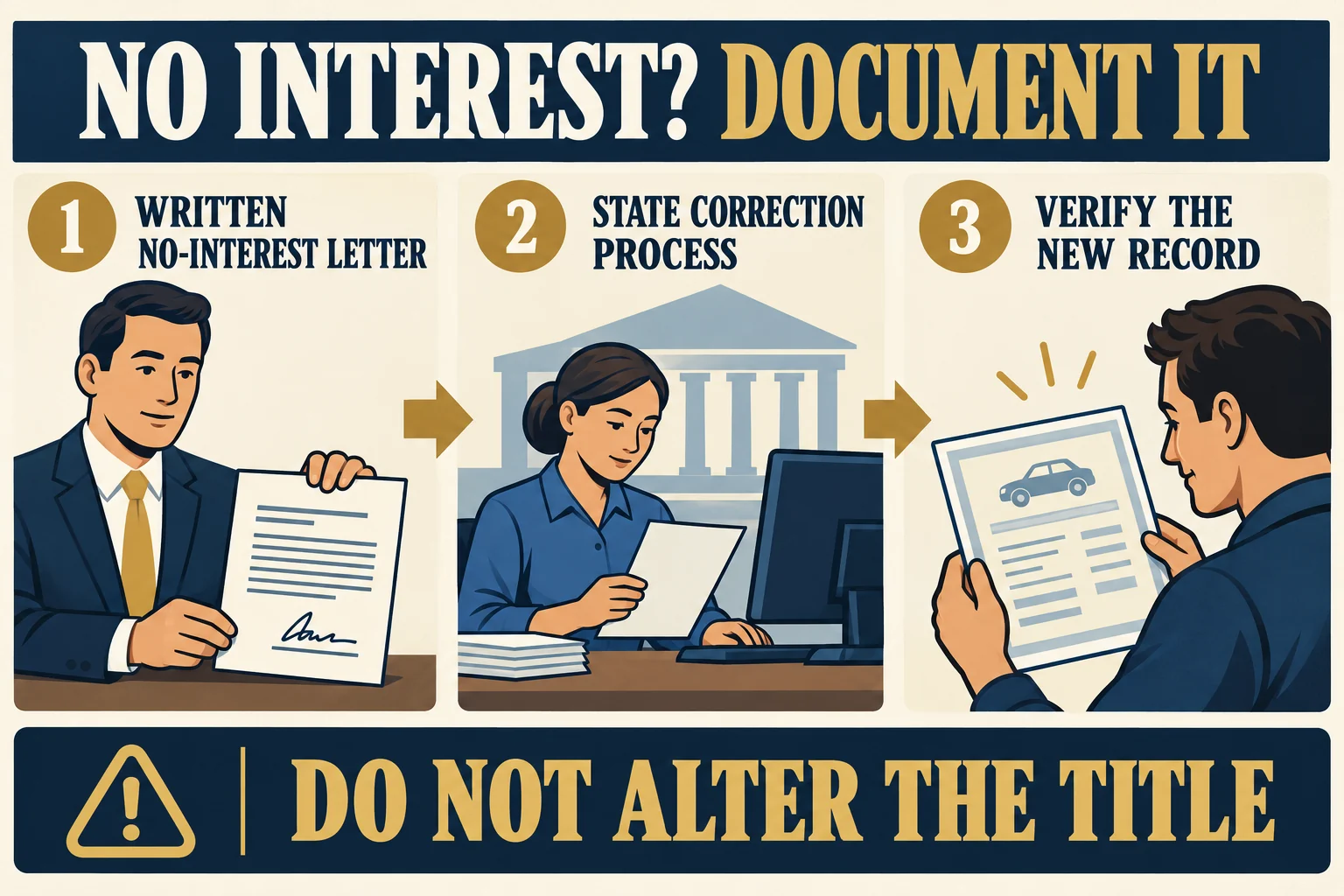
A written no-interest statement may be part of the state's correction process.
Confirm the corrected title before closing the file
After the correction is processed, check the official title/lien record again and inspect any replacement title for the correct owner, lienholder, and address. Save the previous title, correction approval, filing receipt, and final record together so the change is traceable later. If the title is voided, held, or subject to a stop, ask the issuing agency what must happen before it can issue a transferable replacement. Do not sell or refinance based only on a phone assurance when the controlling record remains inconsistent.
If the listed company asserts a debt you do not recognize, the lender records conflict, or a sale, repossession, court, or ownership deadline is approaching, preserve the documents and seek advice specific to the title state and contract. This guide explains record-correction steps, not a determination of who legally owns a debt or lien.
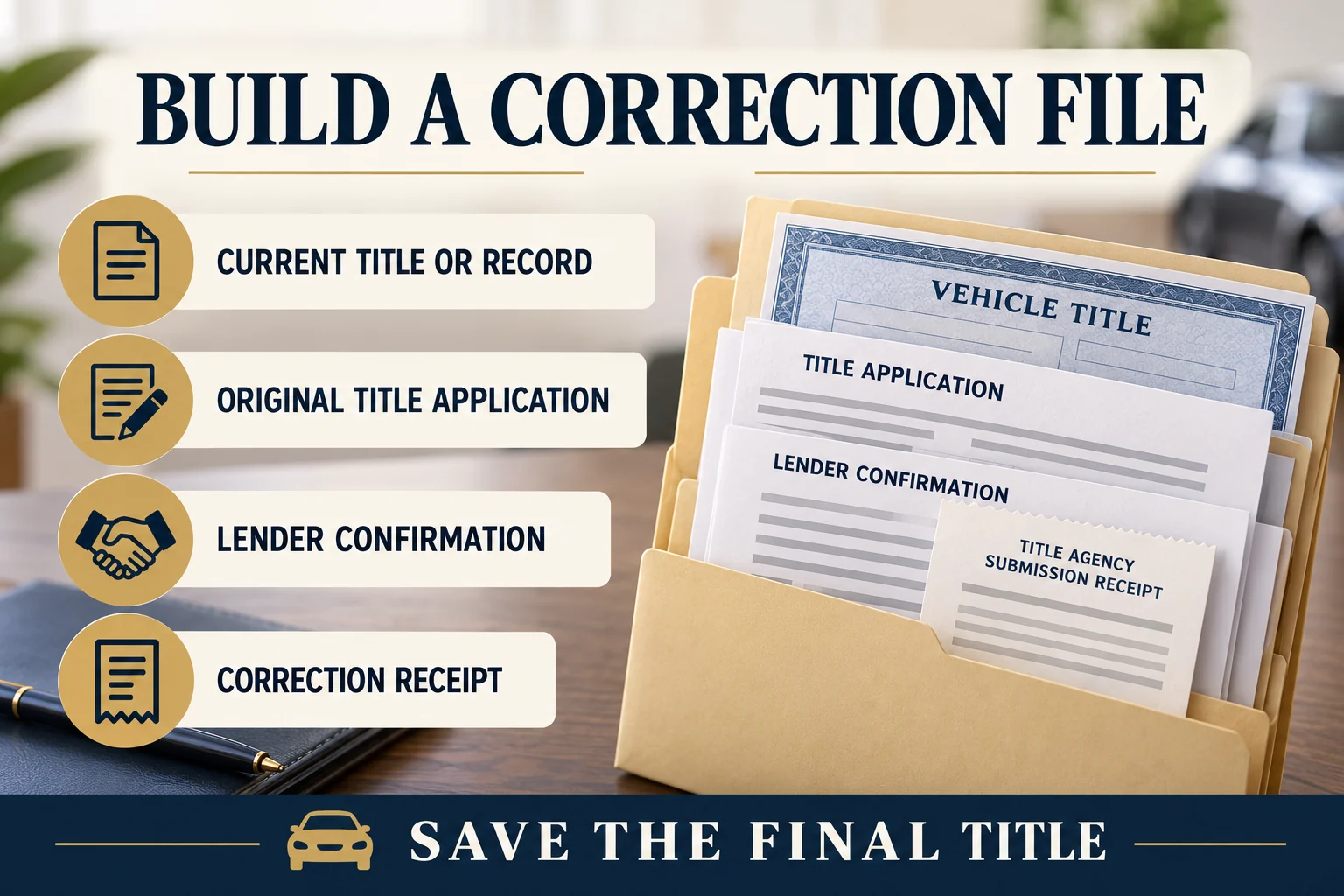
Save the current record, original application, lender response, and filing receipt with the corrected title.
General information only: This is general information, not legal advice - consult a local attorney for your specific situation. State law, contracts, and agency procedures can change the answer.
Sources
- Texas DMV - Motor Vehicle Title Manual, section on correcting wrong lienholder ELT records
- Wisconsin DOT - Know your liens: is this a correction?
- New York DMV - Add or Remove a Lienholder
- California DMV - Lienholder/Legal Owner Omitted, title correction manual
Sources are provided so you can verify the controlling public guidance. State forms, fees, addresses, and procedures can change.
Frequently asked questions
What should I do first if I do not recognize the lienholder?
Save the title and official title-status result, then compare the name with your signed loan documents and any lender-transfer notices. Contact the named company through an official contact source and ask whether it claims an interest and what filing supports the record.
Can I remove an unfamiliar lienholder with a payoff letter?
Not necessarily. If the company says it never held the lien, ask for a written no-interest statement and ask the issuing state title agency which correction or electronic release it requires. A payoff letter only addresses a debt it actually covered.
Is there one federal form to correct the title?
No. The issuing state sets the route, and the responsible party may depend on who filed the original transaction and whether the title is electronic. Confirm current forms, fees, and filing office with that state.
What proves the correction is complete?
Check the title authority’s official record and any replacement certificate. Keep the correction approval, filing receipt, and final record showing the intended owner and lienholder.