New York DMV Rejected Your Lien Satisfaction Proof
New York-specific troubleshooting based on NY DMV's accepted lien-release forms and original-document requirements.
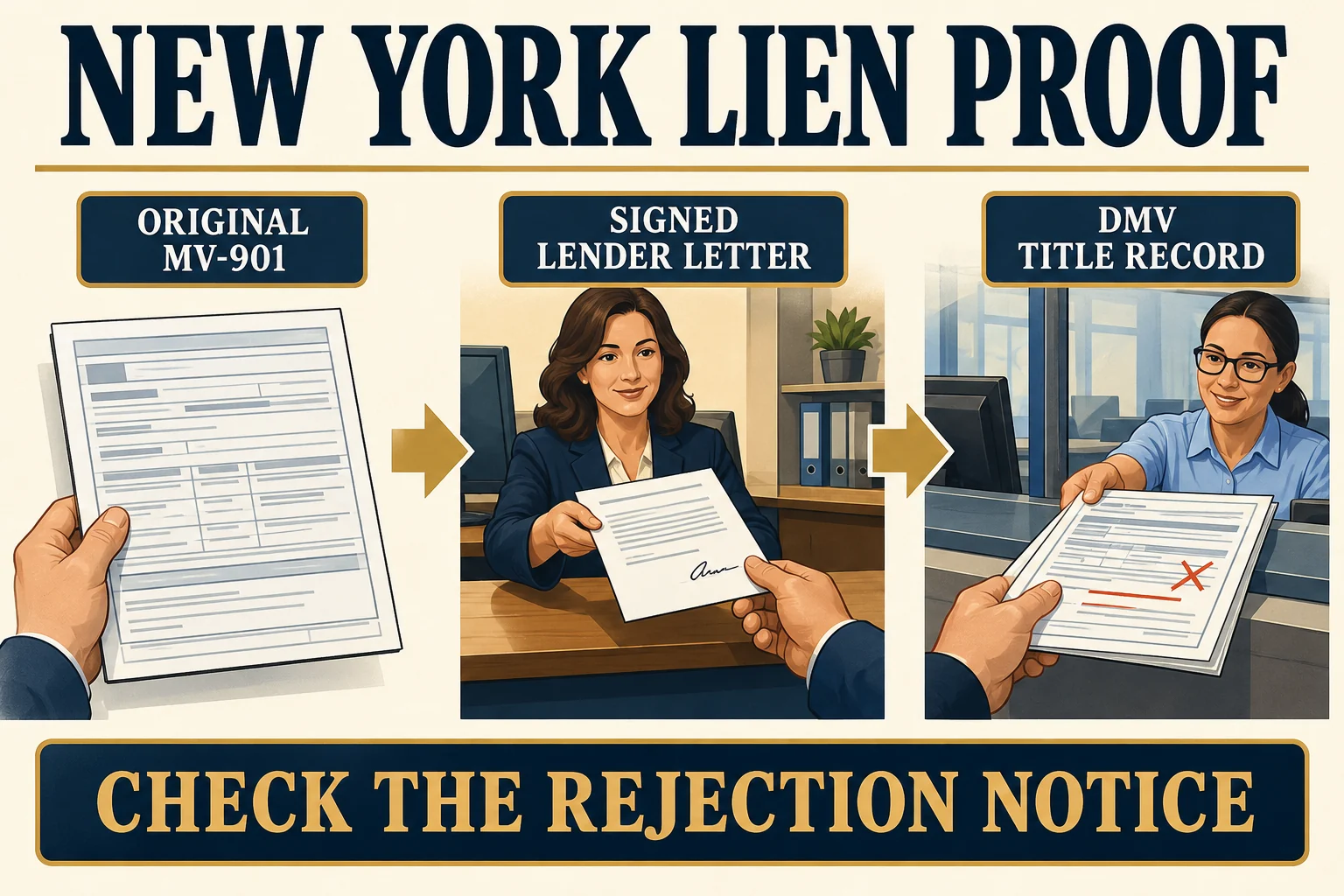
New York DMV returned your lien-satisfaction proof. Start with the rejection notice and exact copy submitted; a paid loan does not automatically create a lien-free paper title. New York separates two outcomes: the lender releases its lien, and the owner asks DMV to issue a title certificate that no longer lists it. Keep the current title, unaltered proof, payoff confirmation, submission receipt, and each DMV response together.
Read the rejection notice before replacing anything
Copy the stated reason word for word, including any form name, vehicle identifier, signature/date issue, or missing original. If the notice is unclear, contact NY DMV Title Services and ask whether the problem is the lienholder's proof, the title certificate, an identity/address mismatch, or another title-record issue. Ask whether it requires an original document or whether a lender-issued copy with an original signature and date is acceptable under the current instructions. Record the representative, date, and case number. A general statement that the loan is paid does not identify what DMV found deficient.
Compare the submitted document with the title record and payoff records. Confirm the listed lienholder, vehicle year, make and VIN, borrower, payoff date, and release date. If any identifier differs, ask the lender to explain or correct that specific mismatch. Never write over, erase, or alter the MV-901, title, or lender letter. Keep the rejected version as evidence and request a corrected replacement from the issuer.
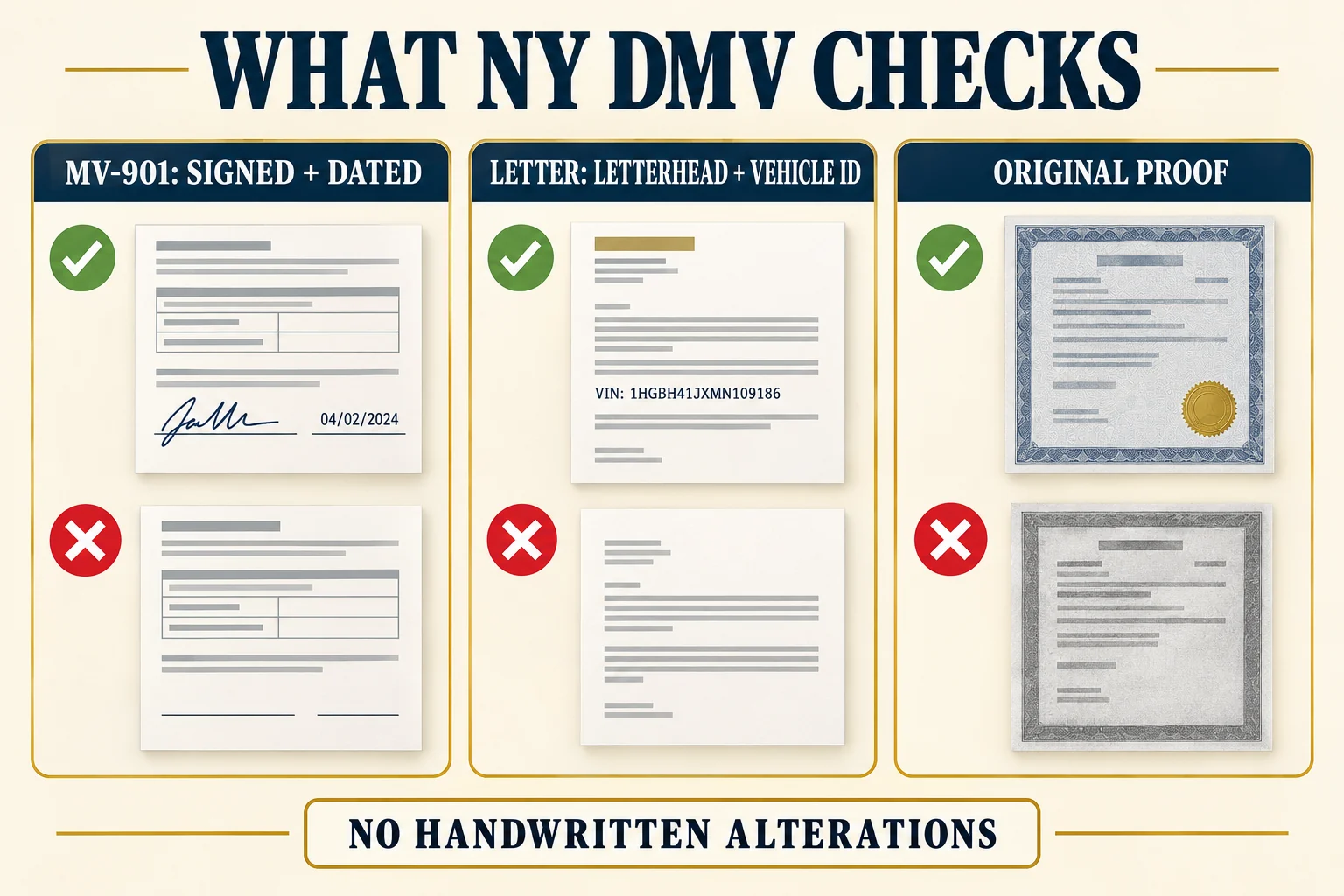
Use the rejection reason to identify whether the lender proof or title record needs correction.
Check the release document itself
NY DMV lists two acceptable forms of lien-satisfaction proof: a Notice of Recorded Lien (MV-901) signed by an authorized lienholder officer and marked to show the lien is satisfied, or a lender letter on the company's official letterhead, signed by an authorized officer, identifying the vehicle and confirming satisfaction. If the lienholder is an individual rather than a lending company, the letter must be notarized. The lender's DMV instructions also say a simple “PAID” stamp is not sufficient. The MV-909 explains signature and date treatment for the lender's MV-901, including when a copy bears an original signature and date. Because DMV's consumer page says the release must be signed and original, follow the rejection notice's specific direction and ask Title Services to reconcile uncertainty before mailing irreplaceable originals.
Ask the lender's lien-release team to review the returned document against the title record, not just the payoff ledger. Request a newly issued MV-901 or compliant letter that states the borrower, year, make, VIN, date satisfied, lienholder identity, and authorized signer's name and title. Ask whether the title bureau shows an electronic release. Keep the lender's written answer and any replacement-mail tracking receipt.
| Proof type | What DMV lists | What to verify |
|---|---|---|
| MV-901 | Lien marked satisfied by lienholder | Authorized officer signature and date; no paid stamp alone |
| Lender letter | Official company letterhead | Vehicle identified and lien satisfaction confirmed by authorized officer |
| Individual lienholder | Letter confirming satisfaction | Notarization required |
Read the current DMV instructions and any specific rejection notice before sending originals.
Separate an electronic release from a clear-title request
A New York lienholder may release a lien to DMV through the Electronic Lien Transfer (ELT) system. An accepted electronic release closes the lien on the title record, but NY DMV says it does not automatically mail a new title. The owner still must request a certificate without the lien, using the current title and proof requirements or the duplicate-title route when appropriate. Ask DMV whether the lien record is closed and whether a paper-title request is also pending. These are separate checkpoints; repeating an ELT release will not by itself produce a mailed clear title.
If you have a New York title and want a clear-title certificate, DMV's current instructions say to mail the original title, original lien-satisfaction proof, and a $20 check or money order payable to Commissioner of Motor Vehicles to the Lien Release address listed on its page. DMV gives a 60-to-90-day estimate for the mailed certificate; treat it as a processing estimate, not a promise. If your address changed since the title was issued, include the current-address proof DMV identifies, such as a current registration, driver license, or utility bill. Scan both sides of every document and retain delivery tracking before sending originals.
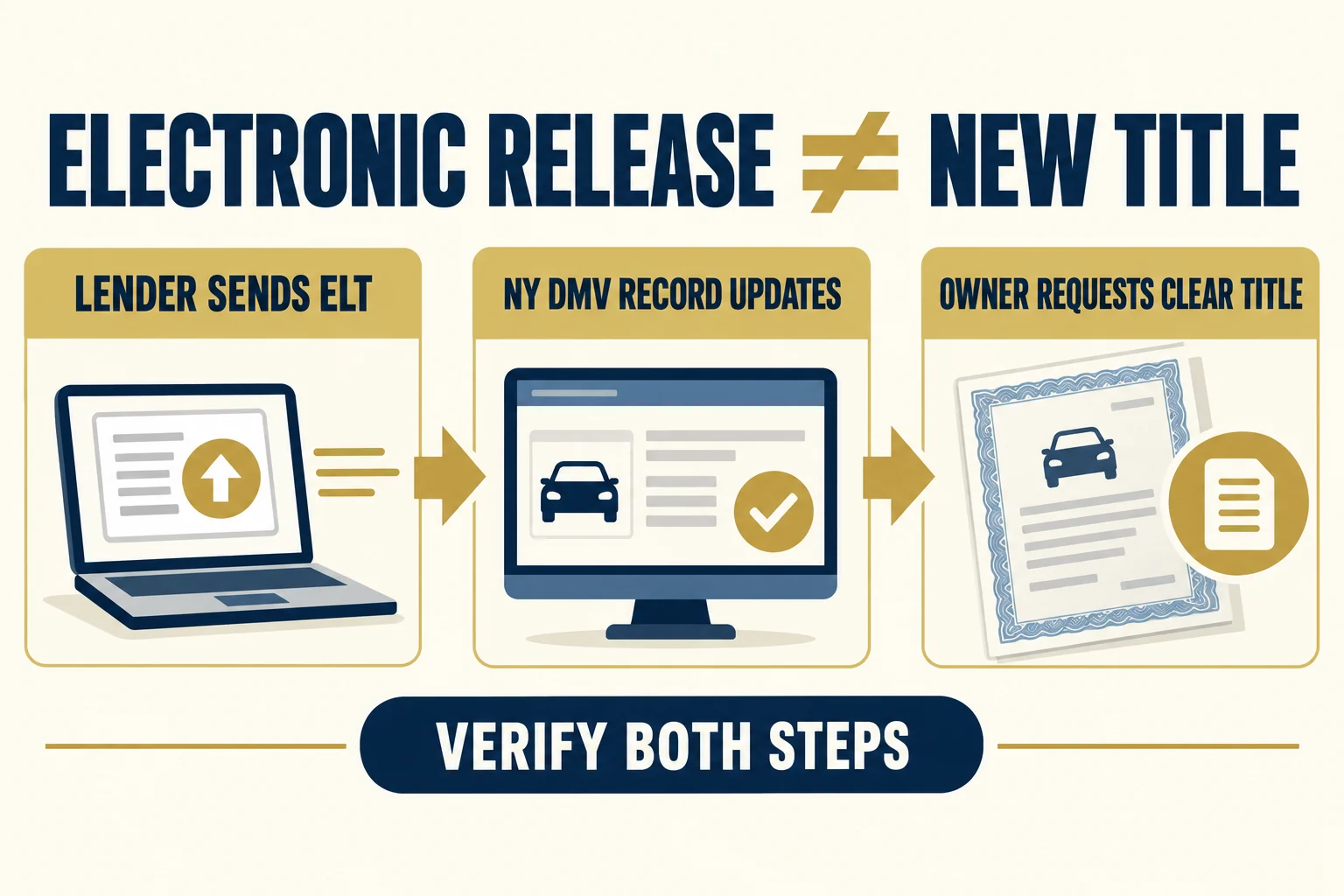
An ELT release can close the lien record without automatically mailing a new certificate.
Choose the right path if a title or release is missing
If the lien release itself is missing, ask the lienholder for an MV-901 or compliant letter; a payment receipt alone is not one of NY DMV's listed proofs. If the title certificate is lost, DMV says to submit its Application for a Duplicate Certificate of Title (MV-902) with the original lien-satisfaction proof and fee, or bring them to an office. Confirm the current form and submission route before filing. If the title is out of state, NY DMV has a separate process: it asks for the out-of-state title, proof of satisfaction, and an explanation letter to issue a New York certificate.
You do not have to obtain a lien-free title just to sell a vehicle in New York. DMV says you may transfer the current title with the original lien release to the buyer, who submits that proof with the title application. Keep a copy for your records. If the release was rejected and a sale is pending, verify with the buyer and DMV that the original proof will meet the title-application requirements before handing over your only original.
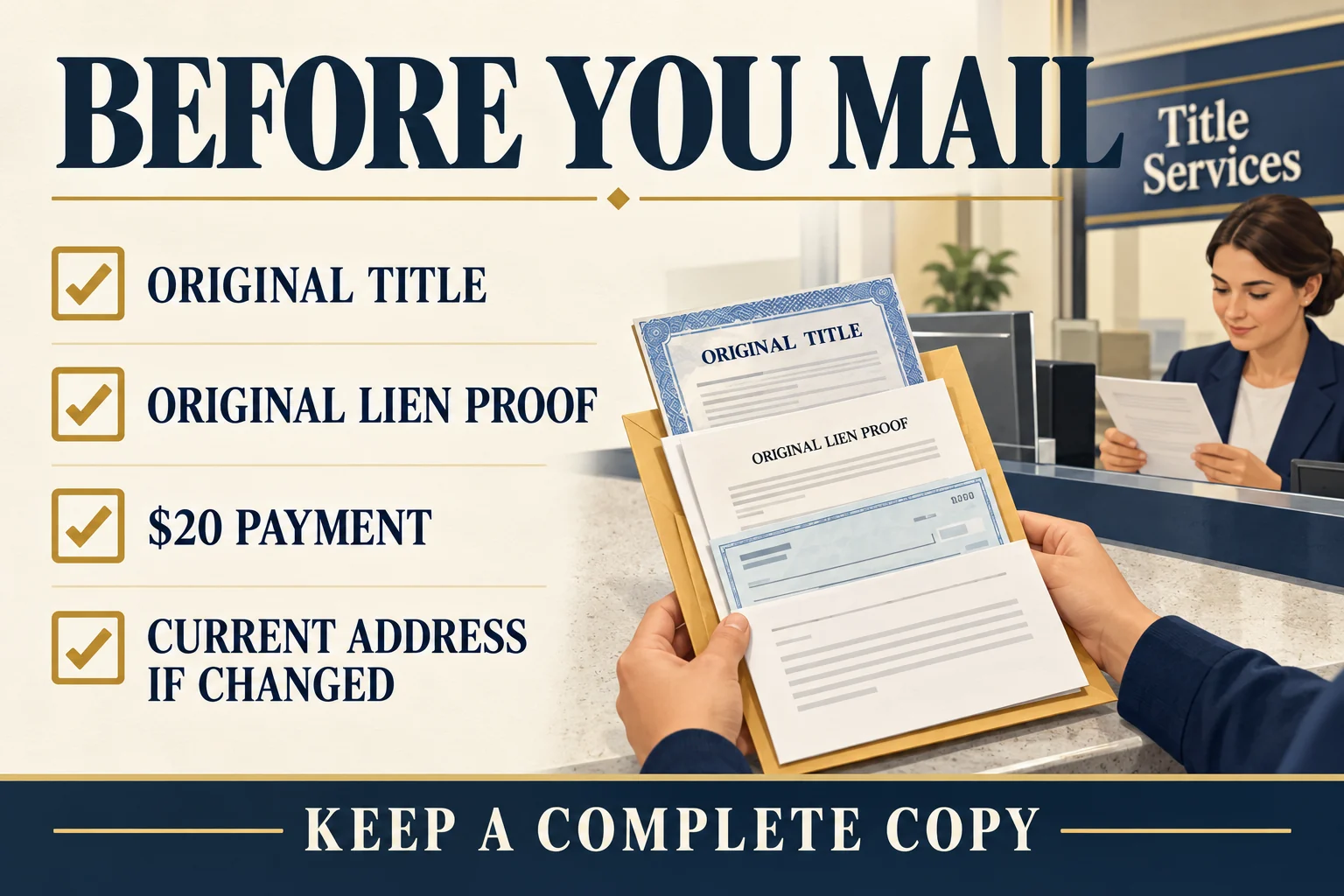
Scan both sides and keep delivery tracking before mailing original paperwork.
Verify the final record
After resubmission, keep the mailing or office receipt and check title/lien status through NY DMV's status service. Confirm both that the lien no longer appears on the vehicle record and, if requested, that DMV issued and mailed the new certificate to the right address. If the record still shows the lien, ask which transaction or document remains unprocessed and request the next action in writing. If DMV's explanation conflicts with the lender's release, preserve both records and ask the responsible office to identify the specific mismatch. A sale deadline, ownership dispute, or repeated refusal may call for New York-specific legal advice; this guide describes DMV procedures, not legal advice.
General information only: This is general information, not legal advice - consult a local attorney for your specific situation. State law, contracts, and agency procedures can change the answer.
Sources
- New York DMV - Add or Remove a Lienholder
- New York DMV - Certificate of Title, lien release and clear title
- New York DMV - MV-909 lender guide to lien release requirements
- New York DMV - ELT-1 Electronic Lien Transfer Program
Sources are provided so you can verify the controlling public guidance. State forms, fees, addresses, and procedures can change.
Frequently asked questions
What lien-satisfaction proof does NY DMV accept?
The DMV lists an MV-901 marked satisfied and signed by an authorized lienholder officer, or a lender letter on official letterhead that identifies the vehicle and confirms satisfaction. A letter from an individual lienholder must be notarized. Follow any specific original-document request on your rejection notice.
Can an electronic lien release automatically mail me a clear title?
No. NY DMV says an ELT release can close the lien record, but a new title is not automatically sent. Ask whether the lien is closed and separately request the clear-title certificate using the current DMV instructions.
What if my NY title was lost along with the lien release?
Ask the lienholder for original proof of satisfaction. NY DMV says to submit MV-902, the original proof, and the applicable fee for a duplicate title; confirm the current instructions before filing.
Do I need a clear title before selling in New York?
Not necessarily. NY DMV says the current title can be transferred with the original lien-satisfaction proof. Keep a copy and confirm the buyer can submit the original with the title application.