What Happens to the Title When You Refinance a Car?
How the old lien is paid, the new lender's lien is recorded, and title custody can change during refinancing.
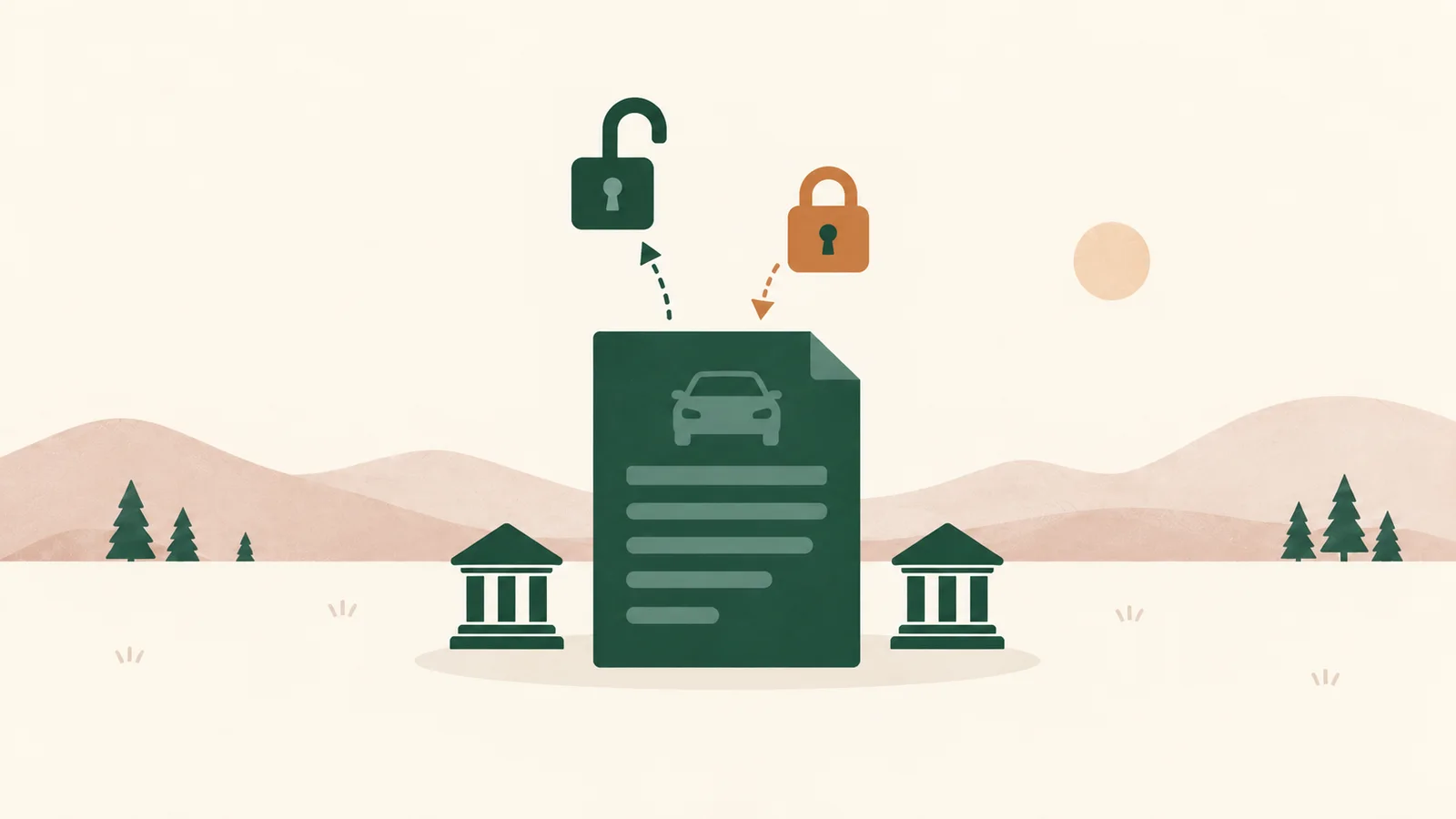
How the old lien is paid, the new lender's lien is recorded, and title custody can change during refinancing. The useful result is not a reassuring phone answer; it is a record you can verify. The narrow issue is whether the old lien was released and the refinance lender was correctly recorded as the new lienholder, and the best starting evidence is old-loan payoff evidence, old-[lien release](/guides/how-to-get-a-lien-release-after-car-loan-payoff) details, new-lender submission details, and the current title record.
Context for this type of case
Audit a refinance as three separate events: payoff to the old lender, release by the old lienholder, and recording of the new lender. The borrower may see only the first event in online banking, which is why whether the old lien was released and the refinance lender was correctly recorded as the new lienholder can remain hidden until a sale or title request. Ask each lender's collateral/title team for its own transaction details rather than assuming one can see the other's state filing.
In an ELT state, a new paper title may not be expected. The useful evidence is the electronic record and the lienholder sequence. If the old lien remains, obtain the old release date and the new lender's submission or rejection message. If the state rejected the new recording, fix that reason before resubmitting. Do not rely on a phone-only explanation here; confirm whether the old lien was released and the refinance lender was correctly recorded as the new lienholder from old-loan payoff evidence, old-[lien release](/guides/how-to-get-a-lien-release-after-car-loan-payoff) details, new-lender submission details, and the current title record.
Refinance title fees also provide clues. Closing documents may show amounts collected for title or lien recording. If the title record is still wrong, ask what filing those fees were meant to cover and who was responsible for sending it. At this checkpoint, use the written record before you trace the lien handoff from old lender to new lender rather than waiting only for a paper title.
How to verify the rule you are relying on
For What Happens to the Title When You Refinance a Car, source quality matters because an operational answer and a legal rule are not the same thing. The old and new lenders are the best sources for their payoff/release/submission events, while the state title agency controls whether those transactions were accepted and what lien is currently recorded. When two sources conflict, prefer the authority that actually controls the record or right at issue and keep the dated version you relied on.
In an electronic title system, borrowers may never see a paper certificate during a refinance. The current state record is therefore more useful than waiting for mail that may not be expected. The useful finish line is the ability to verify that the old lien is gone and the current title record shows the expected new lienholder. Use the documents above to show whether this checkpoint has actually been reached.
Bottom line
A refinance is a lien handoff: new money pays the old secured debt, the old lien is released, and the new lien is recorded. Funding alone proves only the first part. Test that mismatch against that evidence set, and keep both with the record you want corrected.
- Read the title record and identify the listed lienholder.
- Confirm payoff status and the release step still outstanding.
- Trace the handoff between lender and title-record office.
- Verify the corrected title record and save proof.
What to verify first
Ask: (1) did the triggering event actually occur; (2) what record should have changed next; (3) who owns that record; (4) what document proves the mismatch; and (5) what concrete output would show the matter is fixed? For this article, the fourth answer should begin with the dated records. If the record remains stuck, ask for the error, rejection, or unreceived handoff by name.
A five-step working plan
- Save proof the old loan was paid.
- Get the old lender's release details and new lender's title-submission details.
- Compare both with the supporting file.
- Obtain any rejection reason instead of resubmitting blindly.
- Close only after you can verify that the old lien is gone and the current title record shows the expected new lienholder.
A concrete example
Suppose a representative gives a verbal answer that sounds reassuring, but the written record still shows something different. Treat the document as the unresolved fact. Ask the representative what transaction would change it and for a case number tied to that action. The issue is not finished because someone said 'done'; it is finished when you can verify the documented end state. No update means the next question is which transaction failed, not whether someone "worked the case."
- Current title or vehicle-record details
- Payoff confirmation and date
- Lien-release or satisfaction evidence
- Lender and title-office responses
- Copies of submissions and the final record
Evidence that survives a handoff
Keep five items together: old payoff evidence, new loan contract, old release details, new title submission/rejection, and current title record. Save portal messages outside the portal. If an original must be mailed, scan both sides and keep delivery evidence.
Red flags and escalation
Four shortcuts create avoidable trouble: assuming funding completed title work; contacting only one lender; ignoring a rejection reason; and selling before confirming current lienholder. The specific risk to watch in this article is assuming refinance funding proves the state accepted both lien transactions.
Escalate when the written evidence still conflicts with the controlling record after documented contacts, or when a sale, auction, transfer, court date, or other irreversible event is approaching. Ask for one output that can be verified: a verifiable resolution. If state law or contested rights control the answer, local counsel can apply the rule to the facts. If the expected record does not appear, ask for the missing handoff and its status.
Keep the final proof with the vehicle records. Years later, a buyer, lender, DMV clerk, collector, credit bureau, insurer, or estate representative should be able to see why the record changed and see the documented end state: the corrected record. When the next record is unchanged, trace the transaction that should have created the update.
What would change the answer?
Before relying on the workflow, confirm the underlying issue from the records you gathered. Before applying the general workflow, verify any state rule, contract term, court order, military protection, bankruptcy stay, or written lender agreement that changes the ordinary path. If this step stalls, ask which document or electronic message the recipient still lacks.
General information only: This is general information, not legal advice - consult a local attorney for your specific situation. State law, contracts, and agency procedures can change the answer.
Sources
- CFPB - Auto loans
- TxDMV - Add/Remove a Lien on a Vehicle
- New York DMV - Certificate of Title
- California DMV - Electronic Lien and Title Program
Sources are provided so you can verify the controlling public guidance. State forms, fees, addresses, and procedures can change.
Frequently asked questions
What should I verify before I make another call?
Start with old-loan payoff evidence, old-lien release details, new-lender submission details, and the current title record. Identify the organization that controls the record that is wrong or missing, and ask for a written path to verify that the old lien is gone and the current title record shows the expected new lienholder.
Which documents should I keep?
Keep old-loan payoff evidence, old-lien release details, new-lender submission details, and the current title record together with the VIN or account details, decisive dates, and written responses. A short chronology plus source documents is more useful than relying on memory of phone calls.
How do I know the refinance title work is actually complete?
Verify the old loan is paid, the old lien is released, and the current title record shows the expected new lienholder. Funding by itself does not prove every title transaction was accepted.
Is there one nationwide deadline for this?
Company processing estimates are not automatically legal deadlines, and vehicle-title and repossession rules can vary by state. Verify deadlines in the contract, official notice, current state source, or controlling law before relying on them.
When is state-specific legal advice worth considering?
Escalate when reliable documents still conflict, an irreversible event is approaching, or the answer turns on disputed ownership or state-law rights. Preserve the record and consider local counsel when routine processing cannot resolve whether the old lien was released and the refinance lender was correctly recorded as the new lienholder.