Private-Party Car Sale With a Lien: A Safer Closing Checklist
A transaction checklist for sellers and buyers when a lender still has a recorded security interest.
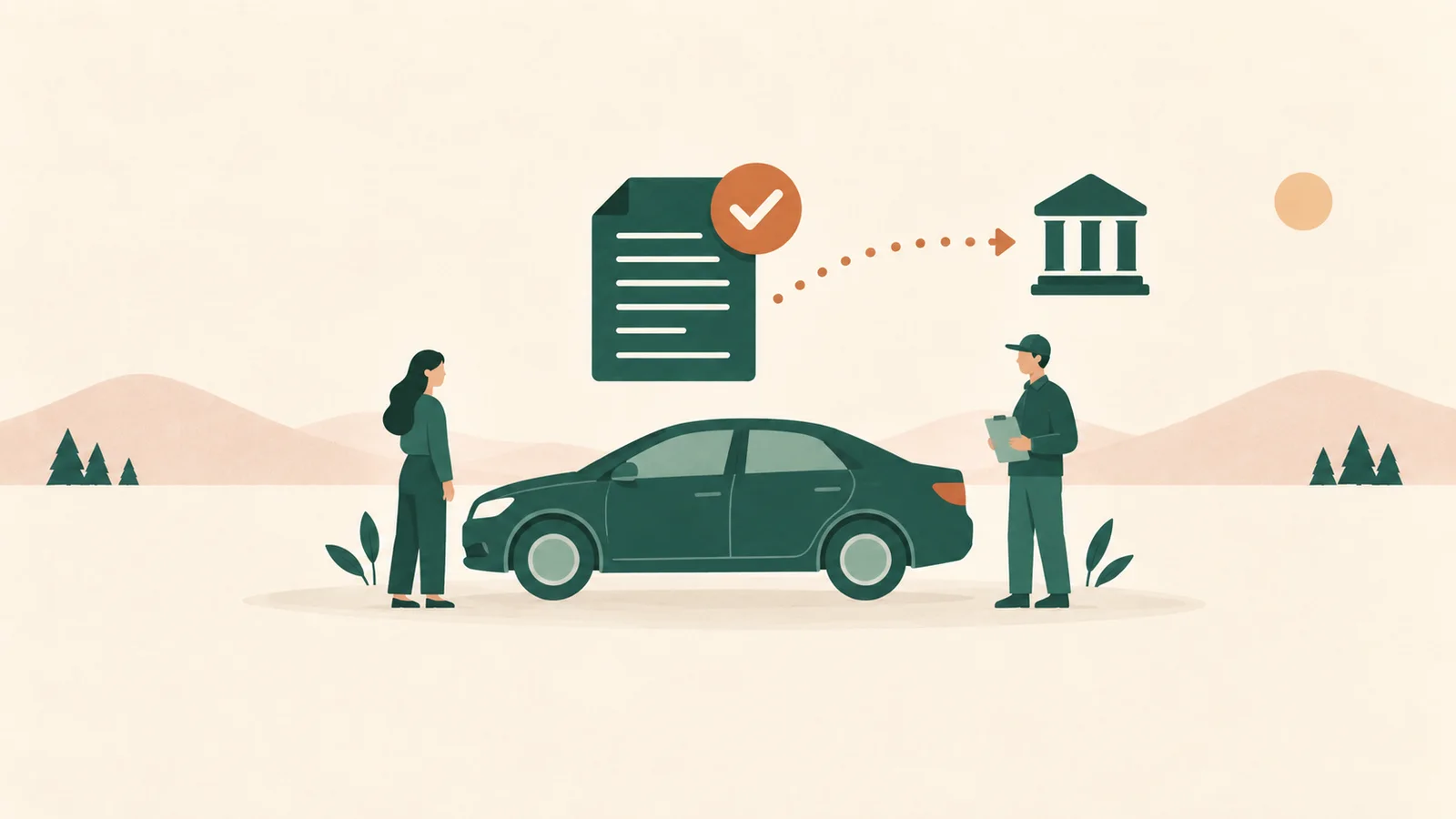
A transaction checklist for sellers and buyers when a lender still has a recorded security interest. Treat this as a chain-of-records problem: one event should create the next document or system change. Here, the link to test is closing a private-party sale without leaving the buyer or seller exposed to an unresolved lien; if it fails, the next request should be to coordinate lender payoff and title delivery before deciding when possession changes hands.
Context for this type of case
Treat a financed private sale like a miniature closing. The buyer, seller, lienholder, and title agency each need a defined role. Start with the payoff quote and compare it with the agreed sale price. If payoff is higher, the seller must fund the difference or arrange another lawful source; if sale price is higher, the agreement should state when the seller receives the remaining equity. For closing a private-party sale without leaving the buyer or seller exposed to an unresolved lien, that money map is as important as the title signatures.
The buyer should independently verify the VIN, title/lien status, and lender payoff instructions before releasing substantial funds. The seller should know what evidence will show the old loan is actually closed. If a lender branch or documented escrow-style closing is available, it can reduce uncertainty because the payoff and transfer instructions are visible to both sides. At this checkpoint, use the written record before you coordinate lender payoff and title delivery before deciding when possession changes hands.
Do not let possession race ahead of paperwork without a written plan. State rules differ on plates, bills of sale, odometer disclosures, tax, and title submission. The article's general sequence should therefore be paired with the buyer's and seller's current state instructions before the keys and money change hands. A complete file should make it possible to show that the lien payoff cleared and the buyer can complete the state title transfer. Use the payoff quote, verified lienholder instructions, title record, bill of sale, and closing receipts to show whether this checkpoint has actually been reached.
How to verify the rule you are relying on
A good verification habit is to separate first-party evidence from explanatory material. Use the lender for the payoff quote and payment instructions, and the buyer/seller states' motor-vehicle agencies for transfer requirements. General finance articles can explain the sequence but do not replace state title rules. Save the exact notice, agency page, contract clause, or account message that supports the next step; do not rely on a search-result snippet when a deadline or legal right is involved.
Why this happens
Use a payoff quote rather than the statement balance. A payoff quote is tied to a date and can include accrued interest or other amounts needed to close the secured debt. Close the file only when you can show that the lien payoff cleared and the buyer can complete the state title transfer. Use the payoff quote, verified lienholder instructions, title record, bill of sale, and closing receipts to show whether this checkpoint has actually been reached.
Positive equity and negative equity change who must bring money to closing, but neither changes the basic requirement that the lien be satisfied before clean ownership transfers. Before moving on, make sure the key fact actually supports the documents above.
- Confirm who holds the title and whether a lien remains.
- Agree how the lender payoff will be handled.
- Keep payment, release, and transfer records together.
- Verify the final title record before closing the file.
Separate the records
Put five lines on a page: trigger date; current status; expected status; organization with edit authority; requested result. If any line is based only on a phone statement, replace it with a document, portal message, state record, notice, or accounting before escalating. The end state should let you verify the documented end state. Use that mismatch to show whether this checkpoint has actually been reached.
Work backward from the desired result
First call: obtain a dated payoff quote. Second check: write down the route for buyer funds and any seller shortfall/equity. Cross-check: verify lender payment instructions independently. Before acting: agree who receives the released title and who files transfer paperwork. Closeout: after funding, confirm payoff and a verifiable resolution.
How the facts can diverge
Imagine two organizations point at each other. One says its part is complete; the other says it is waiting. Instead of retelling the whole story, ask the first for the date/method of its handoff and the second for the exact item it has not received. Compare those answers to the underlying issue. The contradiction usually narrows the gap.
- Current title or vehicle-record details
- Payoff confirmation and date
- Lien-release or satisfaction evidence
- Lender and title-office responses
- Copies of submissions and the final record
Build the file before calling again
Build the file around artifacts, not memory. The minimum packet is payoff quote, written sale terms, verified payment instructions, proof of shortfall/equity handling, and final lien release and transfer paperwork. Add a one-line note explaining what each item proves.
When to stop treating it as routine
Move beyond front-line support when the same mismatch survives two documented handoffs. Request the specialist team that owns the record, attach the short timeline, and state that evidence set in the first paragraph. When legal rights may be expiring, do not rely solely on an ordinary service queue. Use the next accepted document or account update to decide whether this step is finished.
Watch for these failure modes: using statement balance instead of payoff, handing over possession before title path is clear, ignoring negative equity, trusting unverified payment instructions. If a workaround does not change the controlling record, it is not a real resolution.
Before you stop, compare the corrected record with the document that started the problem. If the VIN, names, dates, balance, lien status, sale figures, or credit status still conflict, leave the case open and ask for the remaining mismatch to be explained in writing. At this checkpoint, use the written record before you coordinate lender payoff and title delivery before deciding when possession changes hands.
What would change the answer?
The general sequence stops being reliable if the condition you are trying to verify does not support the supporting file. For Private-Party Car Sale With a Lien: A Safer Closing Checklist, treat any contrary contract language or state-specific procedure as a branch that must be checked before acting.
Final file check
Close Private-Party Car Sale With a Lien: A Safer Closing Checklist by putting the unresolved handoff beside the newest record and asking whether they now support the corrected record. If not, identify the first handoff that is still unconfirmed and make that the subject of the next written follow-up.
Keep one short chronology for this guide with the trigger date, each response date, and the date the final record changed. That chronology is more useful later than a folder of screenshots with no explanation. Preserve the record that started the issue and the record that reflects the later result.
General information only: This is general information, not legal advice - consult a local attorney for your specific situation. State law, contracts, and agency procedures can change the answer.
Sources
Sources are provided so you can verify the controlling public guidance. State forms, fees, addresses, and procedures can change.
Frequently asked questions
Which record should I check first?
Start with the payoff quote, verified lienholder instructions, title record, bill of sale, and closing receipts. Identify the organization that controls the record that is wrong or missing, and ask for a written path to show that the lien payoff cleared and the buyer can complete the state title transfer.
What evidence is most useful if this becomes a dispute?
Keep the payoff quote, verified lienholder instructions, title record, bill of sale, and closing receipts together with the VIN or account details, decisive dates, and written responses. A short chronology plus source documents is more useful than relying on memory of phone calls.
Should I call the lender or the title agency first?
The right contact is the organization that can change the disputed record. Ask each party what record it owns, what it received, what it sent, and what exact document or transaction is still missing.
Can a buyer pay the lender directly?
That can be part of a private-sale closing, but use verified payoff instructions and a written plan for any seller equity or shortfall, title delivery, and possession. State transfer procedures still apply.
When should I stop treating this as routine paperwork?
Escalate when reliable documents still conflict, an irreversible event is approaching, or the answer turns on disputed ownership or state-law rights. Preserve the record and consider local counsel when routine processing cannot resolve closing a private-party sale without leaving the buyer or seller exposed to an unresolved lien.